
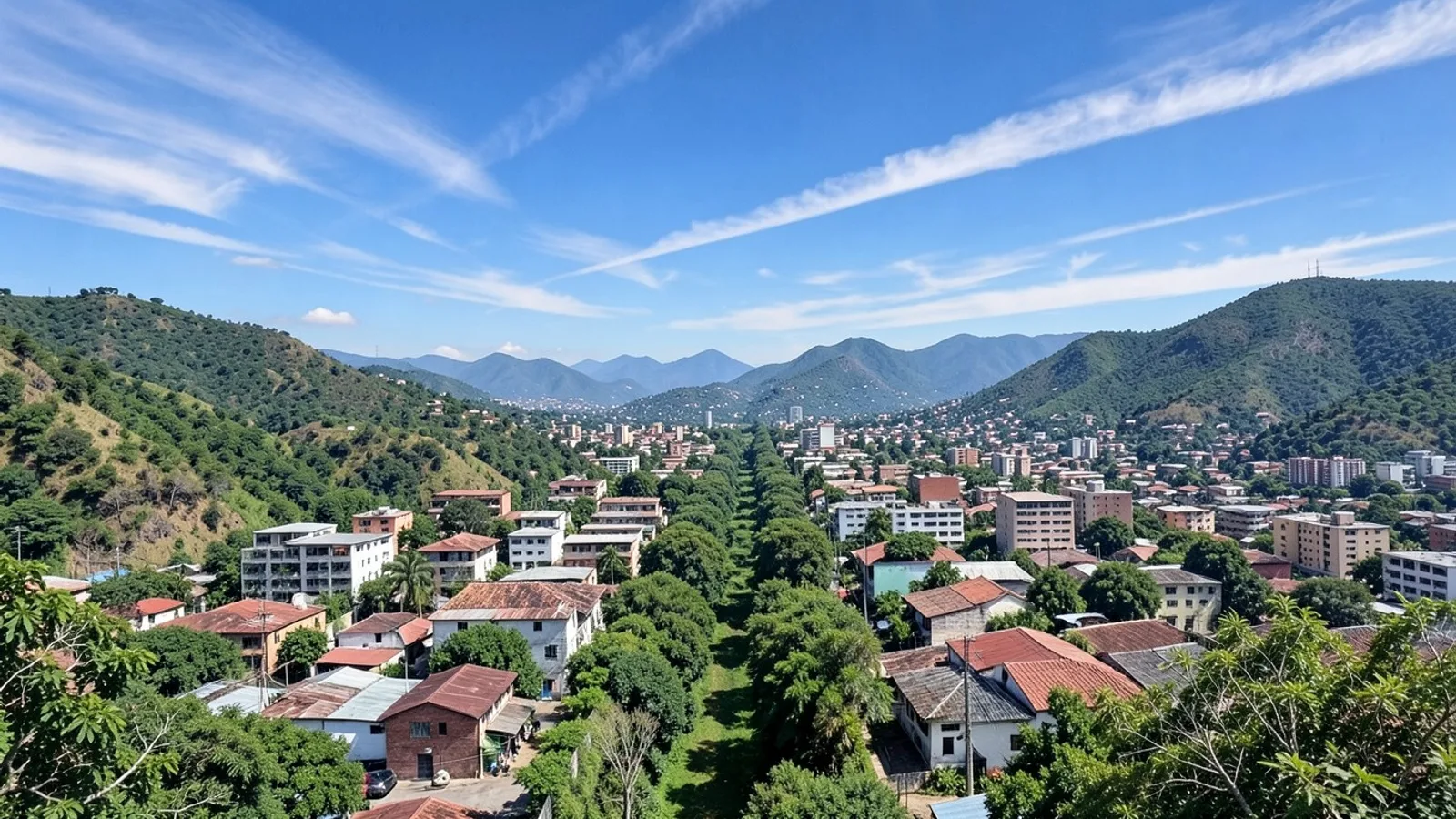
Planning one's contributory life and seeking benefits from Social Security represent essential milestones in the journey of any worker. In Ipatinga, a municipality located in the state of Minas Gerais with a population of 235,311 inhabitants, productive activity and daily work routines bring together career paths shaped by industry, commerce, logistics, and general services. Faced with diverse careers that often alternate formal employment, individual self-employed contributions, and periods in activities involving exposure to agents harmful to health, complex uncertainties arise regarding the legal requirements for obtaining retirement and pension benefits. In this scenario, the support of a social security lawyer makes it possible to thoroughly examine contribution records, identify gaps in official registries, and devise sound legal strategies to protect rights earned over years of work.
Specialized intervention in the field of Social Security Law should not be sought only at the immediate moment when a person reaches an advanced age or suffers an illness that causes disability for their usual duties. Prior advisory guidance plays a decisive role in the early identification of registration discrepancies, such as employment contracts without an end date recorded in databases, contributions made below the legal minimum that require grouping or supplementation, and divergences in personal data. By consulting social security lawyers, the insured individual prevents substantial losses when calculating the initial monthly income amount and avoids exhausting delays or summary rejections resulting from the lack of proper documentary evidence. To understand the support pathways in the municipality, citizens can access the initial service page and check the available assistance options.
Analysis of contribution time and retirement options under the general regime
Recurring changes in Brazilian social security legislation have transformed the granting of retirement benefits into a procedure of high technical precision. Choosing the best time to claim the benefit is no longer a simple tally of dates, requiring comparative calculations and thorough simulations among various transition rules. Advice provided by a social security lawyer enables the assessment of scenarios such as the points transition system, the fifty percent toll, the one hundred percent toll, and the progressive age system associated with contribution time. This diagnosis prevents workers from precipitously choosing an unfavorable option that applies severe reduction factors to the final benefit amount, pinpointing the exact date when the administrative claim will provide the greatest financial advantage permitted by law.
Another structural aspect of this technical work is the regularisation of the National Social Information Registry before the National Social Security Institute. It is very common for the system to contain pending-issue indicators that prevent the automatic validation of certain employment intervals, periods without regular contributions by employers, or individual contributor payments made under incorrect codes. Legal assistance guides the retrieval of documents contemporaneous with the periods worked, making it possible to rectify record discrepancies so that no lawful period of professional dedication is discarded when calculating retirement benefits.
Proving activities performed under conditions harmful to physical integrity or health also demands meticulous evidentiary attention. Workers who performed duties exposed to continuous industrial noise, excessive heat, mineral dust, high-voltage electricity, or harmful chemical substances have the right to a special computation of that time or to the granting of special retirement itself. For this, it is essential to review the Professional Social Security Profile (PPP) and environmental assessment reports provided by employing companies. If the worker secured rights through a final judgment before the Labour Court, whose regional jurisdiction belongs to the Regional Labour Court of the 3rd Region (TRT-3), the specialist verifies whether the recognition of employment relationships or salary differentials was properly recorded with the federal social security agency to impact the benefit calculations.
Challenges before the INSS and representation before the Federal Court
The daily processing of applications with the National Social Security Institute frequently encounters administrative denials that create uncertainty for insured individuals. Errors in calculating time worked, discrepancies in medical assessments, and unjustified delays in evaluating claims are recurring obstacles faced by the public. Faced with an adverse decision from the federal agency, the technical guidance of a social security lawyer becomes indispensable to examine the grounds for the denial and select the appropriate procedural avenue, whether by lodging an administrative appeal or filing a lawsuit before the Federal Court and the Federal Small Claims Court.
Among the main substantive claims requiring ongoing legal assistance, the following stand out:
- Temporary or permanent disability benefits: judicial challenges to improper medical discharges or denials of temporary disability benefits and permanent disability retirement, substantiating the claim with detailed medical reports, clinical assessments, and laboratory tests to support an evaluation by an expert appointed by the court;
- Continuous Cash Benefit (BPC/LOAS): handling of applications for social assistance intended for seniors aged 65 or older or individuals with long-term disabilities facing socioeconomic vulnerability, gathering documentation demonstrating family income composition and household expenses;
- Survivor pension and stable union: proving the insured status of the deceased policyholder and developing evidence to demonstrate the financial dependency of children and the existence of a stable union between partners or spouses, addressing the absence of a formal marriage certificate with robust documentary evidence;
- Crediting of rural work periods: locating and organizing historical civil registry certificates, rural deeds, agricultural contracts, and producer invoices evidencing rural labor within a family farm economy during childhood or youth, enabling its recognition toward rural or hybrid pensions;
- Review of previously granted benefits: meticulous audit of the award letter and calculation statement of contribution wages to verify whether recognized contribution periods were improperly excluded or inflation adjustment indices were incorrectly applied.
In situations where administrative remedies are exhausted without vindicating the citizen's rights, filing an action before the Federal Court and the Federal Small Claims Court enables comprehensive evidentiary proceedings under full adversarial scrutiny and the right to a defense. In turn, complementary civil matters, public registry certificates, or probate proceedings in the municipality are handled before the State Court in the Judicial District of Ipatinga, whose central courthouse is located at Avenida Maria Jorge Selim de Sales (Pça dos Três Poderes), 170 – Centro, Ipatinga - MG, CEP 35160-011. State-level appellate cases within this jurisdiction proceed to the Court of Justice of Minas Gerais, located in the state capital, Belo Horizonte, while constitutional and federal litigation may ascend to the Superior Court of Justice and the Federal Supreme Court, both located in the national capital, Brasília. All legal practice strictly complies with the guidelines of the Statute of the Legal Profession and the Brazilian Bar Association, with any guarantee or advance promise of results regarding any legal matter being strictly prohibited.
Labor Relations and Contribution History in Surrounding Municipalities
The geographical location and importance of Ipatinga as an urban and operational center in eastern Minas Gerais generate a continuous flow of workers commuting daily between different municipalities in the region. This regional mobility results in contribution records marked by a succession of contracts across different companies and shifts between heavy industrial activities, operational roles, and commerce, requiring specialized technical care in retrieving and organizing payment histories.
A constant example of this integration occurs with the municipality of Coronel Fabriciano, located at a distance of 11.2 km from Ipatinga. There is a significant contingent of residents who live in Coronel Fabriciano and provide services in industrial areas or commercial services in Ipatinga. Over decades of work, these professionals accumulate records across different employers, often facing unclosed employment contracts or defunct companies, which requires the assistance of a social security lawyer to retrieve historical employment ties and prove essential contribution periods.
Similarly, a significant functional flow is observed from Santana do Paraíso, located 12.1 km from Ipatinga. The provision of services in logistics, mechanical maintenance, and transportation by residents of Santana do Paraíso often demands attention to the correct issuance of reports documenting exposure to unhealthy and hazardous agents. When denials of special periods by the social security agency occur, legal action works to compare the information from contemporary environmental reports so that the years worked under hazardous conditions are properly counted.
This dynamic of regional connection is also reflected in relation to Ipaba, a municipality located 13.7 km from Ipatinga. Many workers began their careers performing rural work or working in small businesses in Ipaba before moving into formally registered positions in Ipatinga. In these cases, technical work enables the unification of registration records and the verification of past rural activity, integrating it with subsequent urban contributions to make hybrid retirement feasible.
The daily movement of insured individuals also extends to cities such as Timóteo, 17.2 km from Ipatinga, as well as Belo Oriente, located at 28.2 km, Inhapim, at 44.6 km, Caratinga, at 54.9 km, and Tarumirim, located 59.4 km from Ipatinga. The productive diversity observed in these municipalities—combining large industrial facilities, pulp and paper companies, transport carriers, and agricultural farming—generates multifaceted careers. To ensure that the insured does not suffer losses due to fragmented employment ties, the methodical gathering of documents from each working stage is essential to safeguard full social protection.
Procedures for organizing documents and proving contributions
The speed and effectiveness in granting any social security benefit depend on an orderly and consistent collection of documents. To guide the insured individual before filing administrative requests or legal actions, it is recommended to adopt the following evidentiary verification roadmap:
- Issue the analytical CNIS statement: access the official digital portal of Social Security to obtain the complete report of contributions and ties, checking whether all contracts have admission and termination dates, and identifying acronyms for registration issues;
- Gather physical and digital Employment Record Books: locate all physical copies of the Employment and Social Security Card, ensuring that admission registration pages, notes on role changes, vacations, and general notes pages are legible and preserved;
- Retrieve payment slips and booklets: for periods where contributions were made as an autonomous worker, individual contributor, or voluntary contributor, file the mechanically authenticated bank receipts to validate payments that do not appear in the computerized database;
- Request special activity reports: request from the industries and employers where work involved exposure to noise, heat, chemical products, or biological risks the Social Security Professional Profile (PPP), duly completed and signed by technical supervisors;
- Organize medical documentation for disability cases: separate updated medical reports containing the International Classification of Diseases (ICD), the express description of functional limitations, prescriptions for continuous-use medications, and recent diagnostic tests;
- Compile proof of rural activity: gather civil birth, marriage, or baptism certificates qualifying the parents or the insured individual as rural workers, in addition to public deeds of rural properties, lease or loan agreements, and rural producer invoices from the period in question;
- Identify parallel contractual repercussions: if the insured individual identifies unauthorized loan deductions on their benefit statement or related financial pending issues, they can consult the legal platform to learn about the appropriate procedures before protection agencies.
With this documentation organized in chronological order, the social security lawyer is able to accurately calculate contribution time, identify the most advantageous retirement rule, and solidly structure the evidentiary grounds before the INSS or before the Judiciary.
Guidelines for ethical hiring and using the app for consultations
The practice of law is guided by strict adherence to the ethical standards established by the Statute of the Legal Profession and the Code of Ethics and Discipline of the Brazilian Bar Association. When conducting a consultation, planning an application before the social security agency, or initiating legal proceedings in the Federal Court, the professional acts with technical independence and transparency. According to ethical standards, no social security lawyer can promise or guarantee a favorable outcome in a lawsuit or benefit claim, as the final decision rests exclusively with the agency's officials and the competent judges.
Financial transparency is another essential pillar in the client relationship. All legal fees must be agreed upon directly with the professional and set down in writing in a formal contract before any service effectively begins. This contractual agreement outlines with precision the actions included in the representation, any expenses related to certificates, and the percentage applied to the amounts awarded in the event that the benefit is successfully granted, ensuring mutual clarity and predictability.
With the aim of facilitating access to qualified legal support in Ipatinga and neighboring municipalities, our app provides a direct, confidential, and free alternative, without requiring a prior login or initial registration to report the issue. Citizens describe what happened in their own words by recording an audio message or typing text. An assistant then organizes this information into a clear and objective summary of the case and directs the request to options of qualified lawyers who practice in the social security field in the municipality.
Users retain full autonomy to decide which lawyer they wish to speak with. Professionals publish a page on the system detailing their practice areas and respond directly to incoming consultation requests. All preliminary dialogue takes place in a private environment within the app itself and only progresses to a formal engagement when both parties give their mutual consent, keeping contact information protected until that reciprocal acceptance occurs.
If you need to plan your retirement, regularize contribution periods with pending issues in the CNIS, or challenge the denial of a social security benefit in Ipatinga and the surrounding region, report your case in the app in your own words to choose a social security lawyer, formalize all fees in writing before work begins, and receive legal guidance with technical balance, discretion, and without any promise of results.
Ipatinga and surroundings
Lawyers who practise in Ipatinga also take cases from nearby cities.
How it works
- Tell the case
By voice or text, no sign-in. It takes a few minutes.
- The assistant organises it
Facts, dates and documents become a clear summary.
- You choose the lawyer
Professionals who practise in Ipatinga, in alphabetical order.
Legalocal does not recommend or rank professionals: the list follows alphabetical order.
Frequently asked questions about Ipatinga
When is it worth consulting pension attorneys in Ipatinga?
Guidance is recommended for analyzing CNIS statements, checking retirement transition rules, or challenging benefit denials by the National Social Security Institute in the Judicial District of Ipatinga. Residents of neighboring cities, such as Timóteo (17.2 km away), also seek this support to plan applications with professional backing.
Can residents of Coronel Fabriciano seek legal guidance in Ipatinga?
Yes. Workers from Coronel Fabriciano (11.2 km from Ipatinga) can obtain support to verify open employment records, organize special contribution period reports, and submit claims or lawsuits before the Federal Court and the Federal Small Claims Court.
How can insured workers from Santana do Paraíso prove working periods?
Insured workers who worked in Santana do Paraíso (12.1 km from Ipatinga) can gather work cards, payment slips, and contemporary proof to resolve registration discrepancies before the INSS. The lawyer reviews these records to prevent legitimate periods from being excluded from the benefit calculation.
How does contacting and hiring work through the app?
Users describe their situation by voice or text, free of charge and without logging in. An assistant organizes the information into a summary and introduces local attorneys practicing in the field. Contact is confidential within the app, and legal fees are agreed upon in writing with the professional before work begins, with no guarantee of outcome.